
What Makes Some People Look Younger Without Looking Done
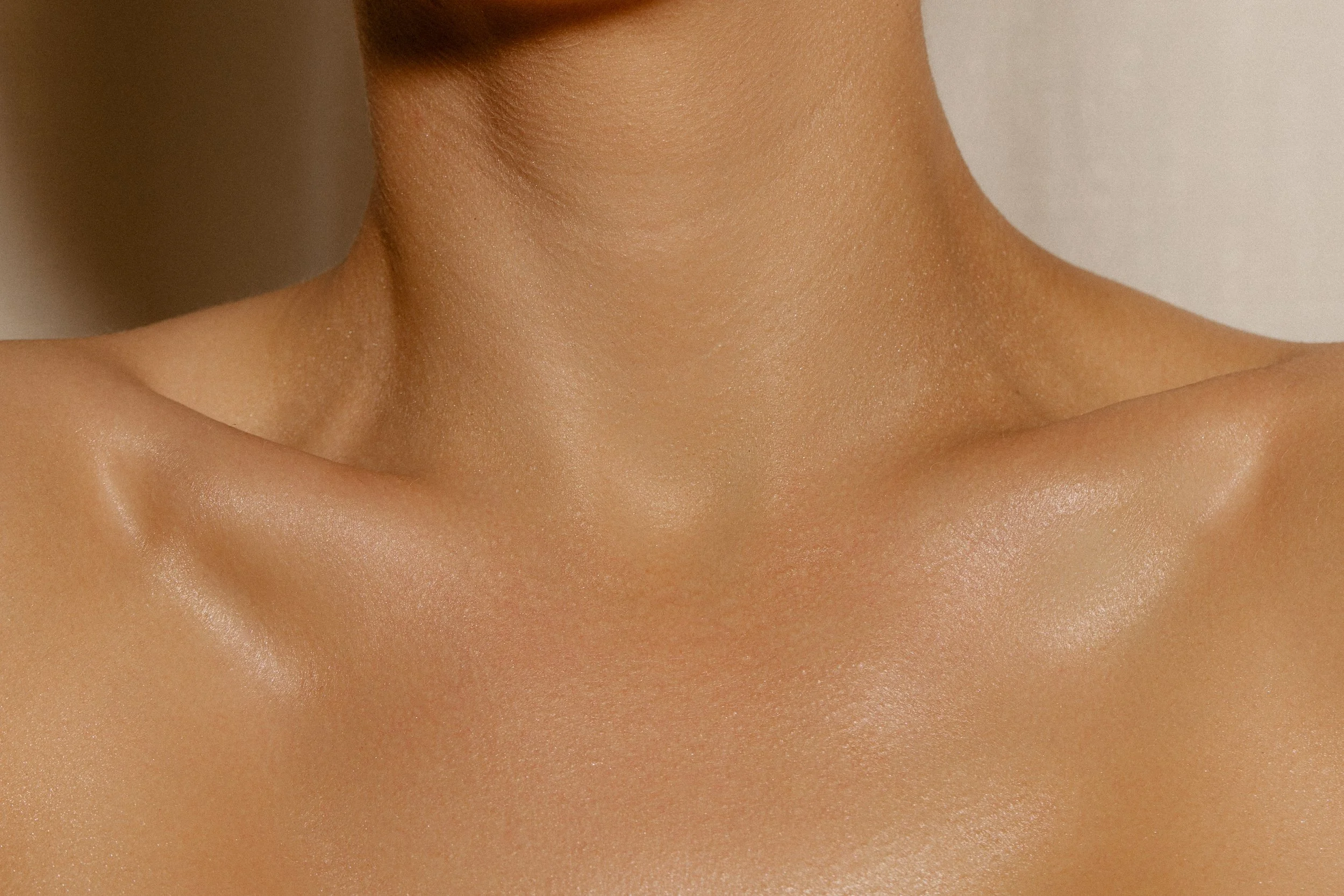
The people who age the best rarely look like they’ve had anything done.
Here’s why that’s no accident.
The short answer: The faces that look younger without looking treated share a specific set of qualities. Skin that is luminous and even in texture, facial contours that are well-defined without looking inflated, features that are proportionate and harmonious with each other, and an overall impression of health rather than correction. Achieving this requires addressing the underlying structure and biology of the face rather than its surface, and it demands more technical precision and restraint, not less.
We all have the ability to identify it instantly. The person at the reunion who looks genuinely younger than they did fifteen years ago, not different, not pulled, not frozen, just somehow better. And we’ve all seen the opposite: the face that has clearly been worked on, that is technically younger-looking in some ways, but that creates an indefinable feeling of wrongness that the eye catches immediately, even if the brain can’t articulate why.
The difference between these two outcomes is not the quantity of treatment or the expense. It is not the age of the person, the skill of any single injection, or any one product used. It is a philosophy, a completely different understanding of what aging actually is and what the appropriate response to it actually looks like.
This article is about that philosophy.
Why Our Brains Detect “Done” Faces Instantly
Before discussing what makes someone look naturally younger, it’s worth understanding why we recognize artificially treated faces so reliably, and why that recognition feels almost automatic.
The human brain has evolved extraordinarily sophisticated systems for reading faces. We process facial information in dedicated neural regions; we extract enormous amounts of social, emotional, and biological data from a face in fractions of a second. Among the things we’re calibrated to detect is biological consistency, the degree to which a face’s various features make sense together as a coherent whole.
A face that has been treated in ways that disrupt its natural harmony sets off a quiet alarm in the observer’s brain. The features don’t quite add up. The movement doesn’t match the structure. The volume is in places that don’t correspond to how faces actually look at any age. The brain registers the inconsistency as “something is off,” even when it can’t consciously identify what.
This is the aesthetic equivalent of the uncanny valley, the phenomenon in animation and robotics where characters that are almost-but-not-quite human produce an involuntary sense of wrongness more intense than obviously non-human characters. A face that is almost-but-not-quite natural activates the same response.
“I think about the uncanny valley constantly,” Irena Mielke, FNP-C, says. “My job is to make sure no one ever experiences that response looking at someone I’ve treated. If someone looks at a patient of mine and feels that quiet alarm, even without being able to name it, I haven’t done my job. The goal is to create a face that your eye slides right over, thinking only ‘she looks great.’”
What “Done” Actually Means, Biologically
Understanding why overly treated faces look “done” requires understanding what those treatments did, and, usually, didn’t do.
The most common aesthetic mistakes that create an obviously treated appearance share a common root cause: they address the surface manifestation of aging without addressing, or even understanding, the structural and biological cause of it.
The overfilled face is the most recognizable example. Volume loss is real. As facial fat deflates and descends, faces lose the three-dimensional fullness that characterizes youth. The instinct to replace that volume is correct. The mistake is replacing too much of it, or placing it incorrectly, adding volume where volume doesn’t naturally exist in any face, or treating the face as if more volume everywhere equals more youth.
A younger face is not simply a fuller face. A younger face is a structurally specific face, with volume in precise locations, in precise proportions, that relate to each other in a way that creates harmony. A face that has been filled without regard for these proportions and these relationships will look inflated, round, or heavy in ways that no young face actually looks.
The frozen face represents a different mistake. Movement is not the enemy of youth. Expressive faces are read as alive, engaged, and human. A face that can’t move, because its muscles have been paralyzed beyond the point of natural-looking relaxation, loses the quality of aliveness that we associate with vitality and health. It looks preserved rather than well.
The lifted face that shows signs of its lifting represents yet another variation. Tension creates characteristic patterns, the lateral sweep, the upward pull of features toward an unnaturally high position, that the eye reads as surgical. Even when the results are technically excellent, the tension in the tissue is legible.
All of these outcomes have something in common: they were chasing the appearance of youth rather than its underlying biology.
Structure Before Surface: The Foundational Principle
Irena’s philosophy, and the philosophy that guides every treatment decision at The Perfect Secret, begins with a foundational principle that distinguishes regenerative aesthetics from cosmetic aesthetics: structure before surface.
Surface treatments address what you can see. Structure treatments address what supports what you can see.
Botulinum toxin relaxes a muscle. It does nothing to the collagen, the fat compartment, the bone, or the skin quality that surrounds that muscle. Dermal filler adds volume. It does not stimulate new collagen, improve skin quality at a structural level, or address the underlying tissue environment that determines how that volume sits and how long it lasts.
These tools are not wrong. They are simply surface tools. And a face that is treated only at the surface level, however skillfully, will eventually accumulate an appearance of having been treated, because the surface keeps changing while the structure underneath continues to age.
The regenerative approach asks a different set of questions: What is the collagen density of this skin, and can we actively build more of it? What is the tissue quality, and can we improve it at a biological level? What growth factors, stem cell signals, and regenerative processes can we activate to genuinely improve the cellular environment — not just mask the result of its deterioration?
“The question I always ask first is not ‘what can I add or erase?’” Irena says. “It’s ‘what is this face actually missing, at a biological level, and what can we do to provide it?’ Those are completely different questions. And they lead to completely different outcomes.”
The South Korean Influence: Skin Quality First
When Irena traveled to South Korea to study their approach to aesthetics, a country that has arguably produced the most sophisticated and innovative aesthetic philosophy in the world over the past two decades, one principle above all others stood out: skin quality is primary.
Korean aesthetic medicine is built on the understanding that no amount of structural treatment will make someone look naturally younger if their skin quality is poor. Fine lines, uneven texture, dullness, rough surface, irregular tone, all of these undermine any structural work done beneath them. They are also, crucially, what most people are responding to when they describe a face as looking “tired,” “dull,” or “aged,” even when they can’t articulate why.
The Korean investment in skin quality, in the luminosity, evenness, hydration, and translucency of the skin, is what explains why Korean faces so frequently look younger in a way that reads as completely natural. It’s not that they’ve done less. It’s that they’ve invested in a different layer: the layer that actually communicates health, vitality, and youth to the observer’s brain.
This principle is deeply embedded in how Irena approaches treatment planning. Before any structural question is addressed, the question of skin quality is examined: texture, hydration, barrier function, tone evenness, luminosity. A face with excellent skin quality will respond better to every structural treatment and will require less of it. A face with poor skin quality will never look naturally youthful, regardless of what’s done beneath the surface.
The Mathematics of Facial Harmony
Natural-looking youth has a geometric component that is underappreciated in aesthetics but well-understood in art, psychology, and perceptual science.
A face that reads as balanced and attractive, at any age, is one in which the features relate to each other in proportionate, harmonious ways. The ratios between facial thirds, the relationship between the width of the eyes and the width of the face, the distance from the base of the nose to the upper lip, these proportions, studied since the Renaissance, create what the brain perceives as harmony.
When aesthetic treatments disrupt these proportions, by adding too much volume in one area relative to others, by eliminating movement in a way that flattens expression, by lifting in ways that shorten or distort facial thirds, the face looks “off” even to people who couldn’t explain why.
Facial balancing, the practice of assessing the face as a complete geometric and aesthetic system rather than treating individual features in isolation, is one of the most important distinctions between sophisticated aesthetic medicine and basic cosmetic treatment. Every treatment decision should be made in the context of the full face: how does this change relate to everything around it? Does it improve or disrupt the proportional relationships that create harmony?
“I never treat a single feature,” Irena says. “I treat a face. That sounds simple but it’s actually a completely different way of working. When someone comes to me concerned about their nose-to-mouth lines, I’m not thinking about the nose-to-mouth lines. I’m thinking about where the volume has shifted that’s creating those lines, and what restoring it means for the rest of the face. The nasolabial fold is almost never the problem. It’s a symptom.”
Less Is More Precise, Not Less Effective
There is a pervasive myth in aesthetics that conservative treatments are what you do when you can’t afford or aren’t ready for the “real” treatments. That restraint is the beginner’s choice, and that more aggressive intervention is for people who are serious.
The opposite is true.
Restraint in aesthetic medicine is not the absence of skill. It is its highest expression. The ability to add exactly what is needed, and nothing more, requires a more sophisticated understanding of the face than the ability to simply add more. Anyone can overfill. The technical achievement is adding the precise amount, in the precise location, that improves a face without changing its fundamental character.
The faces that produce the “how does she look so good?” response are not faces that have had little done to them. They are faces whose treatments are so precisely calibrated that the result reads as the person at their natural best, rather than as a person who has had something done.
This precision requires several things:
A thorough understanding of facial anatomy, not just surface landmarks
A philosophy that prioritizes biological support over cosmetic correction
The restraint to decline treatments that would technically “fix” something but would compromise the overall impression of naturalness
A long-term treatment relationship that builds cumulatively on itself rather than chasing a single dramatic result
Honest communication with patients about what will and won’t serve them well
“I turn away patients and I turn away treatments,” Irena says. “If someone comes to me wanting something that I believe would make them look more treated rather than better, I say so. Kindly. But clearly. My reputation is built on the faces I’ve touched. Every face that looks natural, rested, and genuine is an advertisement. Every face that looks overdone is the opposite.”
The Regenerative Approach: A Different Goal Entirely
Regenerative aesthetics, the foundation of what Irena practices at The Perfect Secret, is not simply a set of specific treatments. It is a completely different framework for thinking about aging and what to do about it.
The cosmetic framework asks: “What does this person want to change about how they look?”
The regenerative framework asks: “What is happening biologically in this person’s face, and what does their face need to function optimally?”
These seem like similar questions. They lead to very different answers.
The regenerative framework takes into account collagen density and the biology for supporting its production. It considers the skin’s tissue environment, its hydration, barrier function, growth factor activity, cellular repair capacity. It looks at structural volume not as something to be cosmetically replaced but as something to be biologically supported. It considers the whole person: their stress levels, their sleep, their hormonal health, their nutrition, because all of these influence how the face ages and how it responds to treatment.
Treatments in this framework are chosen for their biological activity, not just their visible effects. Sculptra stimulates genuine collagen production, not as a temporary filler that will be resorbed, but as a long-term biostimulator that creates new structural support. RF microneedling creates controlled micro-injuries that trigger the body’s own collagen remodeling cascade, improving the actual density and organization of the dermis. PRFdelivers concentrated growth factors that activate stem cells and support genuine tissue regeneration. Korean skin boosters optimize the extracellular matrix, the biological environment in which all skin cells operate.
Each of these treatments does something real. Not just something visible, something real. And the cumulative effect of real biological improvements is a face that looks better not because something has been added to it, but because its own biology is functioning better.
What to Look for in a Provider
If there is a practical takeaway from everything above, it is this: the most important factor in whether aesthetic treatment makes you look naturally younger or visibly treated is not the treatment itself, it is the person providing it and the philosophy guiding their decisions.
The questions worth asking, explicitly or implicitly, of any provider:
Do they treat the face as a whole? Or do they treat individual features in isolation? A provider who thinks about proportional harmony will make different decisions than one focused on individual lines or areas.
Do they use the word “no”? The willingness to decline treatments that would compromise overall results is a sign of genuine expertise and genuine investment in outcomes. Providers who recommend everything to everyone are not the ones creating naturally beautiful results.
Are their results visible in their patients? Not on a carefully curated Instagram feed — in the faces of actual people they care for. Natural-looking results produce faces you’d never guess had been treated. That’s the goal, and it’s also the challenge of finding the evidence.
Do they ask more questions than they answer in the consultation? A provider who listens carefully to your experience, your concerns, your goals, and your history before making recommendations is working from a different model than one who assesses your face and immediately begins listing options.
Is their philosophy focused on your biology or on a specific set of treatments? The best providers fit treatments to patients. Not patients to menus.
Myth vs. Fact: Natural-Looking Results Edition
MYTHFACT“Natural-looking results means minimal treatment.”Natural-looking results means precisely calibrated treatment. Some of the most natural-looking faces have had years of consistent regenerative care, it’s simply invisible because it’s working with the face’s biology rather than on top of it.“If you can’t tell someone had treatment, it wasn’t worth it.”The inability to detect treatment in a face is the highest measure of success. “You can’t tell she’s had anything done, but she looks incredible” is the gold standard.“More conservative = less dramatic results.”Regenerative treatments that improve skin quality, stimulate collagen, and restore facial architecture often produce more dramatic and longer-lasting improvements than surface-level treatments, while looking entirely natural.“You need to start young to avoid looking done.”Natural-looking results are achievable at any age with the right provider and the right approach. The goal is not to reverse the clock, it’s to optimize the face you have now.“Natural-looking results just mean less filler.”Natural-looking results are about philosophy, facial assessment, treatment selection, and the calibration of every choice, not about the quantity of any single product used.
Frequently Asked Questions
Q: Is it possible to look noticeably younger without anyone being able to tell I’ve had something done?
Yes, and this is the explicit goal of a regenerative aesthetic approach. The faces that generate “you look amazing, what’s your secret?” responses are usually faces that have had significant biological support over time, none of which is visible as “treatment.” It requires the right approach and the right provider.
Q: How do I find a provider who won’t make me look overdone?
Look at their existing patients, not their marketing. Listen to how they speak about results, whether they focus on natural harmony and individual faces, or on specific procedures and dramatic transformations. Notice whether they decline requests or whether every consultation ends in a treatment plan. Ask directly about their philosophy and what they consider a successful outcome.
Q: Is there a treatment that’s more likely to produce natural-looking results than others?
Regenerative treatments, those that stimulate the body’s own biological processes rather than substituting for them, tend to produce the most natural-looking results because they’re working with the body’s own architecture. But the quality of any treatment outcome depends more on the judgment and philosophy of the provider than on the treatment itself.
Q: What’s the difference between looking younger and looking like you’ve had work done?
Looking younger is an impression, the face reads as vital, fresh, healthy, and proportionate, consistent with itself. Looking treated is also an impression, something registers as inconsistent, whether it’s volume in the wrong place, movement that doesn’t match structure, or features that don’t relate to each other naturally. The difference is biological consistency versus cosmetic correction.
Q: How long does it take to see natural-looking improvements?
Regenerative treatments often work on timelines of weeks to months rather than immediately, because they’re stimulating genuine biological processes rather than adding a product. Sculptra builds collagen over three to six months. RF microneedling produces visible improvement over several weeks to months as new collagen remodels. PRF initiates a growth factor cascade whose effects develop over weeks. This slower timeline is part of what makes the results look natural, they emerge the way biological change emerges, not all at once.
Key Takeaways
Natural-looking results that actually make someone appear younger require addressing the structural biology of the face, not just its surface appearance.
Our brains detect “done” faces instantly through the same perceptual systems that read facial harmony and biological consistency. Disrupting those qualities creates an unavoidable impression of artificiality.
The primary principle of a regenerative approach is structure before surface: collagen biology, tissue quality, and facial architecture are addressed before surface-level corrections.
Skin quality, luminosity, texture, evenness, hydration, is the foundation of naturally youthful appearance. No structural work will look natural on skin that lacks quality.
Restraint is not the beginner’s approach. Precisely calibrated treatment requires deeper expertise than more treatment ever does.
Facial harmony, the proportional relationship between all features, must guide every treatment decision. A face treated in isolation of its whole will always look treated.
The right provider is defined by their philosophy as much as their technique. Look for someone who treats the whole face, uses the word “no,” and measures success by the invisibility of their work.