
PRP vs. PRF: What Actually Matters
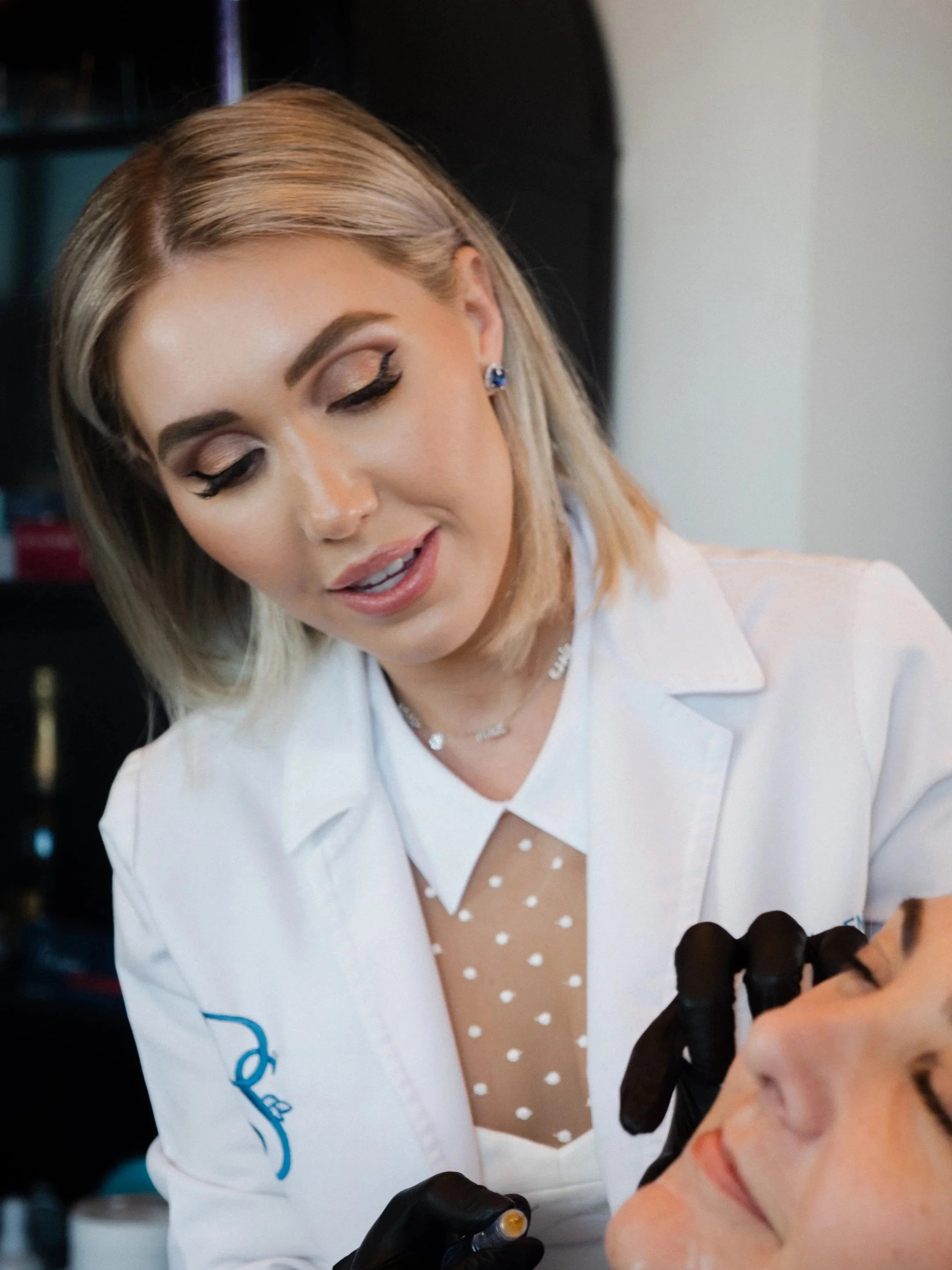
“The question isn’t PRP or PRF. The question is which one is better suited to the outcome you’re trying to achieve.”
PRP vs. PRF: What Really Matters When Natural Regeneration Is the Goal
If you've spent any time researching regenerative aesthetics, you've likely encountered two treatments that sound remarkably similar: PRP and PRF.
Both are derived from your own blood. Both utilize your body's natural healing mechanisms. And both are commonly recommended for concerns such as under-eye rejuvenation, hair restoration, skin quality, and collagen stimulation.
Because the names are similar, many people assume they are essentially the same treatment.
They aren't.
While PRP and PRF share a common foundation, the way they are processed and ultimately how they behave within the body is significantly different.
At The Perfect Secret, we believe the goal isn't simply choosing the newest treatment. The goal is understanding which regenerative treatment is best suited to your anatomy, concerns, and desired outcome.
Here's what actually matters.
What Is PRP?
PRP stands for Platelet-Rich Plasma.
The process begins with a simple blood draw. That blood is then spun in a centrifuge to separate and concentrate platelets, which contain growth factors involved in healing and tissue repair.
The resulting plasma can be injected into targeted areas or combined with treatments such as microneedling.
PRP has been utilized in medicine for decades and remains a valuable regenerative treatment option.
Potential benefits include:
• Improved skin quality
• Support for collagen production
• Hair restoration support
• Enhanced healing following procedures
• Improved overall skin vitality
PRP works by harnessing the body's own regenerative capabilities to support healthier tissue function.
What Is PRF?
PRF stands for Platelet-Rich Fibrin.
Like PRP, it begins with your own blood.
However, the processing method differs significantly.
PRF is spun at a slower speed, allowing for a richer concentration of platelets, fibrin, white blood cells, and growth factors to remain within the final product.
The result is a more biologically active material that releases growth factors gradually over time rather than all at once.
A simple way to think about it:
PRP delivers a concentrated burst.
PRF delivers a sustained release.
This distinction is one of the primary reasons PRF has become increasingly popular in regenerative aesthetics.
PRP vs. PRF: The Biggest Difference
The most important difference isn't what's inside the tube.
It's how long regenerative signaling remains active within the tissue.
PRP tends to release growth factors relatively quickly after treatment.
PRF creates a fibrin matrix that allows growth factors to be released gradually over time.
For many aesthetic applications, this prolonged release can be advantageous because it provides extended biological stimulation to the treated area.
This is why many providers have increasingly adopted PRF for specific regenerative treatments.
Why We Often Prefer PRF for Under-Eye Rejuvenation
The under-eye area is one of the most delicate regions of the face.
Skin is thin.
Support structures naturally change over time.
Volume shifts occur.
And not every patient is an ideal candidate for filler.
This is where PRF can be particularly valuable.
Rather than creating volume in the way filler does, PRF focuses on supporting tissue quality and encouraging healthier, stronger skin over time.
The goal isn't to make someone look different.
The goal is to help them look more rested, refreshed, and healthy.
At The Perfect Secret, this philosophy aligns closely with how we approach regenerative aesthetics.
We believe beautiful outcomes often come from supporting the body's natural processes, not simply adding volume.
Is PRF Better Than PRP?
Not necessarily.
This is where many online articles oversimplify the conversation.
A better question is:
Which treatment is better suited for your specific goal?
There are situations where PRP remains an excellent option.
There are situations where PRF may offer advantages.
The best treatment plan depends on:
• Treatment area
• Skin quality
• Age-related changes
• Desired outcome
• Overall treatment strategy
The answer is rarely one-size-fits-all.
PRP and PRF Are Often Part of a Bigger Strategy
One of the biggest misconceptions in aesthetics is believing a single treatment creates a transformation.
Beautiful outcomes are usually the result of thoughtful sequencing and strategic treatment planning.
PRP and PRF are frequently combined with treatments such as:
• Microneedling
• RF Microneedling
• Hair restoration protocols
• Comprehensive skin health programs
The most natural results typically occur when treatments are chosen intentionally and layered strategically over time.
What Really Matters
The conversation shouldn't be centered around which acronym is trending.
It should be centered around outcomes.
PRP and PRF both represent an exciting shift toward regenerative medicine, treatments that work with the body's natural healing processes rather than simply masking signs of aging.
The best providers understand not only how these treatments work, but when to use them.
Because in regenerative aesthetics, the goal isn't to force a result.
It's to support the body's ability to create one.
Final Thoughts
When natural regeneration is the goal, both PRP and PRF have a place.
The difference isn't simply which treatment is newer.
The difference is understanding how each works and selecting the right option for the right patient at the right time.
At The Perfect Secret, every recommendation begins with the same question:
What will create the most natural, thoughtful, and lasting outcome for this individual?
Because beautiful results are rarely created by doing more.
They're created by doing what matters most.